
-
THE SEVEN LAWS OF THE CODEX
Read more: THE SEVEN LAWS OF THE CODEX1. The Law of Choice Nothing holds greater power than a conscious decision. All systems predict.All forces influence.But choice… rewrites. Illustration:A person stands at a…
-
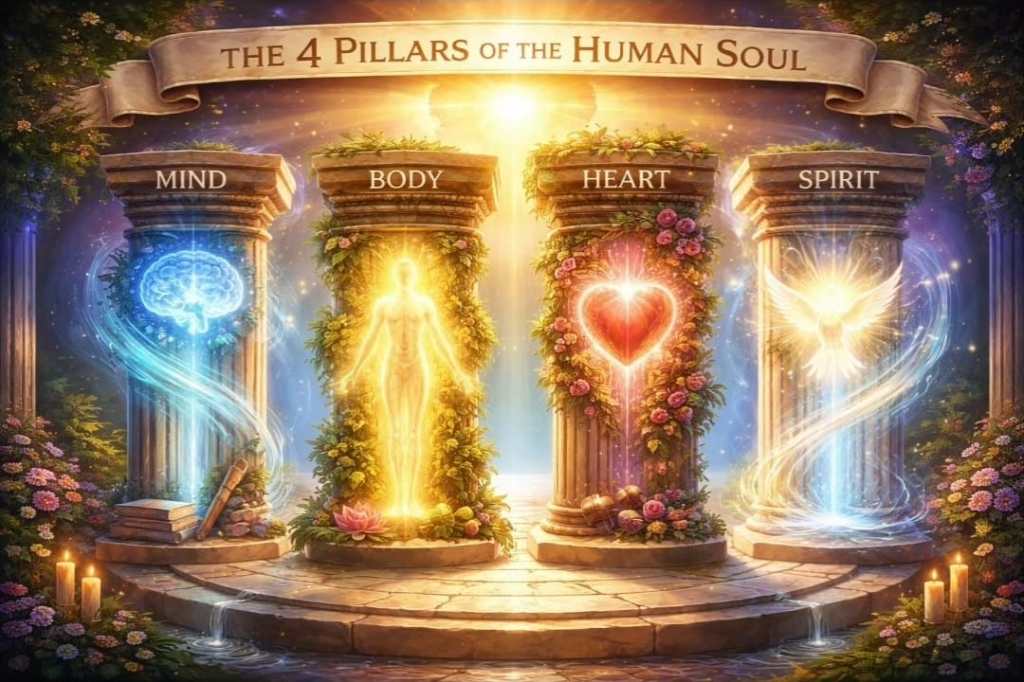
The Four Pillars of the Human Soul
Read more: The Four Pillars of the Human SoulThroughout history, philosophers, theologians, and mystics have attempted to define what it means to be human. While cultures differ in language and symbolism, many traditions…
-
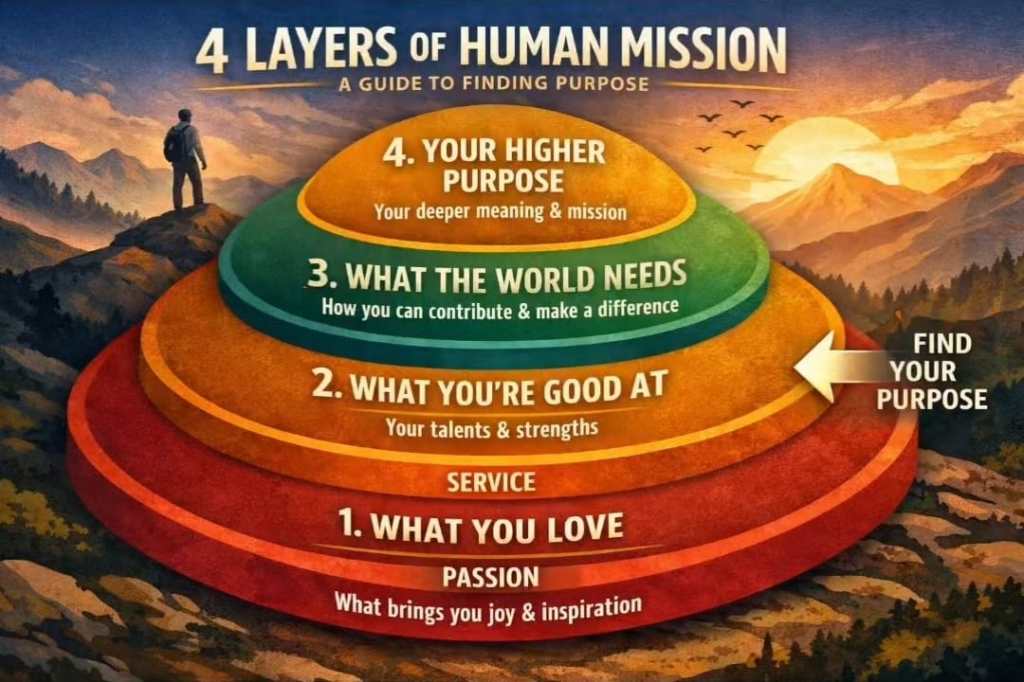
Four Layers of Human Mission: A Guide to Finding Purpose
Read more: Four Layers of Human Mission: A Guide to Finding PurposeThere are a few layers to this. Biological Mission At the most primal level:Survive. Adapt. Continue life. But if that were enough, you wouldn’t be…
Writing Pillars
Narrative function:
Every turning point in the story must return to agency over destiny.
At the heart of the story lies the idea that the most powerful force in existence is the human capacity to choose.
Gods may shape reality, machines may predict behavior, and systems may guide outcomes but none can replace the moral weight of a human decision.
This pillar ensures that every major conflict ultimately resolves not through power or prophecy, but through conscious choice. Arin’s refusal to surrender her humanity becomes the central act that redefines the cosmic order.
Narrative function:
Character choices reflect tensions between these four forces.
The story presents the human soul as a dynamic structure composed of four essential departments: Spirit, Intellect, Will, and Emotion.
Each department contributes to the wholeness of human consciousness:
- Spirit anchors purpose and identity.
- Intellect interprets truth and meaning.
- Will enables decisive action and responsibility.
- Emotion gives depth, empathy, and value to experience.
Rather than portraying humanity as flawed or inferior, the narrative frames the human soul as a balanced architecture that even cosmic entities struggle to replicate.
Narrative function:
The epic must always return to the kitchen-table moments of life.
Despite the cosmic scale of the story, the emotional center remains deeply human and grounded in everyday life.
Moments of humor, hesitation, exhaustion, friendship, and vulnerability remind readers that extraordinary events unfold through ordinary people navigating extraordinary circumstances.
This pillar prevents the story from drifting into abstract mythology and instead keeps the reader connected to the characters’ humanity.
Narrative function:
Revelations arrive in layers, symbols, and echoes rather than direct answers.
The world of The God Codex reveals itself gradually through fragments visions, Codex excerpts, quiet encounters, and philosophical reflections.
Rather than explaining everything outright, the narrative invites readers to participate in the discovery of truth.
This approach mirrors the nature of ancient myths and sacred texts, where meaning unfolds through contemplation rather than exposition.
Narrative function:
Every force — divine, human, or mechanical — contains both creative and destructive potential.
The story resists simplistic portrayals of good versus evil.
Even the Devourer begins as an entity driven by compassion, and the Architect’s neutrality carries its own moral ambiguity. Humanity itself contains both darkness and brilliance.
This pillar ensures that the narrative remains morally complex and philosophically rich.
Narrative function:
The final triumph is not domination, but the preservation of the human soul.
Above all, The God Codex is a meditation on the resilience of the human spirit.
In a universe where gods fracture, machines calculate outcomes, and systems attempt to control reality, humanity’s greatest strength lies in its ability to endure uncertainty while still choosing hope, compassion, and responsibility.
This pillar gives the story its emotional gravity and ultimate message:
true transcendence does not require abandoning humanity, it requires honoring it.
 The God Codex: CHRONICLE OF THE FALLEN AND BOUND